Will AI Replace Google Search? Why People Are Using Both
Will AI replace Google search? It’s the question behind a lot of marketing meetings right now, and the answer matters for where you spend your time and budget.
The evidence says no. Most people are adding AI tools to their routine, not dropping Google. Below, I’ll walk through what the data shows, how people split their tasks, the mistake I see most often, and a simple checklist to show up in both places.
What the Data Says About AI and Google Use
Several studies point the same way.
- Similarweb found that 95% of ChatGPT users also appear in Google’s audience, and that share held from September 2025 through May 2026 while visits to generative AI platforms grew 70% year over year. searchenginejournal
- EMARKETER’s May 2026 survey found that 82% of weekly AI users search Google every day, compared with 71% of all internet users. emarketer
- SparkToro’s research, covered by Search Engine Land, found that Google searches also rise as people adopt AI tools. searchengineland
That is the “AI plus search” pattern, not AI versus search.
Why “Using Both” and “Fewer Searches” Can Both Be True
You may have seen a study showing a drop in searches, which seems to contradict this. A Bocconi University study found a 9.4% drop in traditional search queries among households that gained ChatGPT Search access. searchenginejournal
The two findings measure different things. Overlap counts people, while the Bocconi study counts queries per household. A person can still use Google every week and run fewer searches than before. Clicks can also fall even when the number of people and queries holds steady. searchenginejournalsearchenginejournal
There’s a caveat on the overlap number too. Someone who runs a single Google search in a month counts as a Google user, so it’s a low bar. It tells you people haven’t left, not how much they rely on Google for each task. searchenginejournal
What the Other Side Says
Not every source agrees. A Higher Visibility survey of 1,500 US adults reported that basic Google search use fell from 73% to under 67%, while daily AI use rose from 14% to 29%. That is a vendor survey with a modest sample, so treat it as a directional signal, not a verdict. It does suggest that AI use is growing quickly. engageweb
How People Use Google and AI Together
In my experience, people use each tool for a different job.
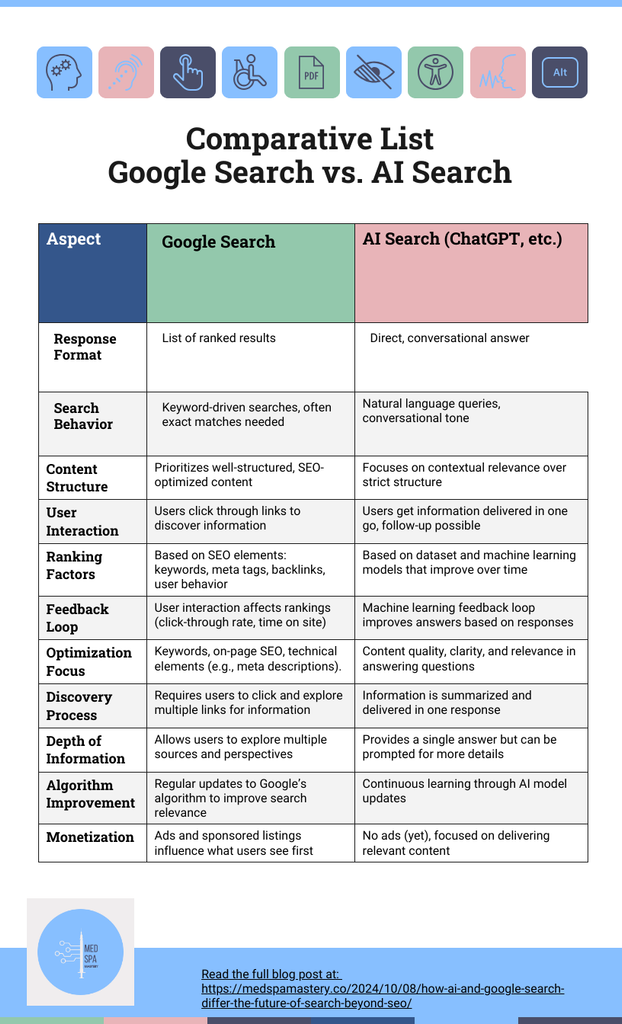
| Task | AI tool (like ChatGPT) | |
| Finding a specific website | Best fit | Weak fit |
| Current information | Best fit | Depends on the tool |
| Product research | Strong | Good for comparing options |
| Understanding a topic | Gets you sources | Explains it simply |
| Summarizing and organizing | Not built for it | Best fit |
A common pattern is to search Google first, then paste the results into ChatGPT and ask it to explain them or plan next steps. Google finds the trusted sources, and the AI tool helps make sense of them.
[ADD EXAMPLE: one real case from your own work, a client, or your own search habits, in two or three sentences.]
The Biggest Mistake: Assuming AI Replaces Google
The mistake I see most is treating this as an either/or choice. People assume AI completely replaces Google, when most users pair them for different purposes.
The risk is easy to see. If you cut your SEO work because “everyone is on ChatGPT now,” you may lose visibility where most people still start their search. The opposite mistake is just as costly: ignoring AI tools entirely while more of your audience uses them to research and compare.
One limit to keep in mind: behavior varies by audience. Younger users and some industries lean on AI more, so check your own analytics before making big changes.
How to Show Up in Both Google and AI Answers
The foundation is the same for both: clear, accurate, trustworthy content on a technically sound site. Here is the seven-step checklist I use.
- Start with clear search intent. Know what the searcher wants: an answer, a comparison, or a purchase. Match the page to it.
- Write helpful, original content. Add your own experience, examples, and data, not a rewrite of what already ranks.
- Get the SEO basics right. That means a focused title tag, a good meta description, clean URLs, and proper internal links.
- Use clear headings and FAQs. Short, direct answers under question-style headings are easy for readers, Google, and AI systems to pick up.
- Back claims with trustworthy sources. Link to credible research, such as Google’s guidance on helpful content.
- Make the page fast and mobile-friendly. Slow pages lose readers and can hurt your rankings.
- Update it regularly. Refresh statistics and examples so the page stays accurate.
Start With One Page This Week
Don’t try to overhaul your whole site. Pick your audience’s single most important question and create one high-quality page that answers it directly. Make it clear, accurate, and well structured. That one page is a good test of whether the approach works for you.
FAQ
Will AI replace Google search?
Current evidence says no. Most AI users still use Google regularly, so the two work as complements. AI use is growing quickly, though, so the balance may keep shifting.
Do ChatGPT users still use Google?
Yes. Similarweb data shows about 95% of ChatGPT users also appear in Google’s audience.
Should I stop investing in SEO?
No. The same qualities that help you rank on Google, such as clear, trustworthy, well-structured content, also help AI systems understand your pages.
Does AI reduce clicks to websites?
Some research points to fewer clicks even when people keep using Google, so track your own referral data instead of relying on averages.
Conclusion: Plan for Both
So, will AI replace Google search? Not based on today’s data. People use Google to find sources and current information, and AI tools to explain, summarize, and compare. Your job is to be findable in both.
Your next steps:
- Run your top page through the seven-step checklist.
- Create one page that answers your audience’s most important question.
- Check your analytics for shifts in traffic and clicks.